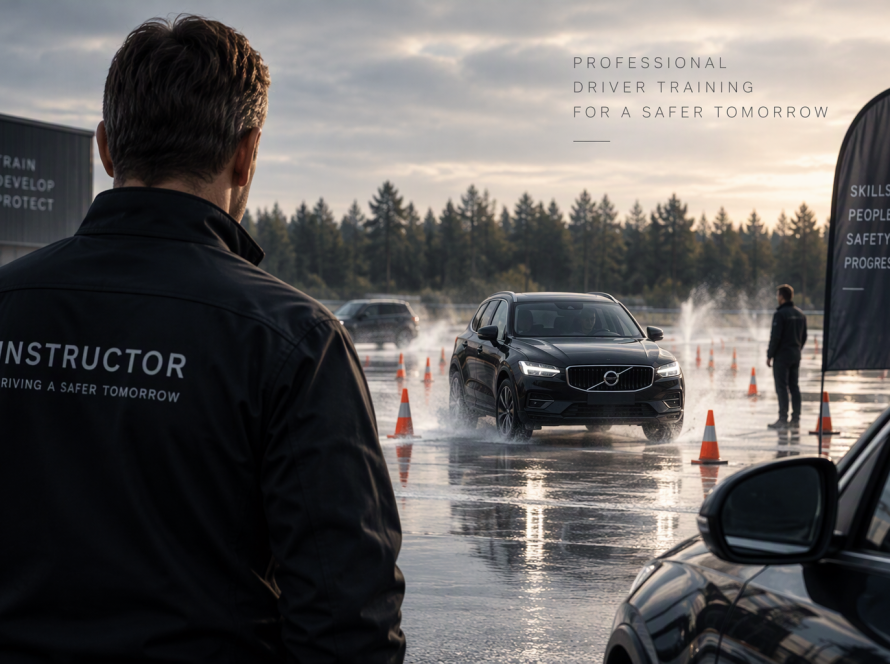
In May, an important part of the capability that would later define FEA Executive Advisors began taking shape.
Selected personnel completed the Enhanced Special Awareness Security Course, a customised programme designed to strengthen situational awareness, behavioural understanding and proactive decision-making.
The training was completed under the FEA Executive Advisors identity, the principles behind the programme remained highly relevant: notice changes early, understand the environment and act before uncertainty becomes an incident.
This was not a course about appearing more alert or creating a visible security presence.
It was about learning to observe with greater discipline.
Awareness Without Unnecessary Attention
Professional drivers operate in constantly changing environments. Airports, hotels, offices, residences, event venues and public spaces each have their own normal patterns of movement and behaviour.
Most journeys pass without incident. That does not remove the responsibility to remain attentive.
Effective situational awareness begins by understanding what is normal in a particular environment. Once that baseline is understood, changes and anomalies become easier to recognise. A vehicle that remains in several locations, an individual whose attention does not match the surroundings or an unexpected change in the atmosphere may deserve closer consideration.
The objective is not to treat every unusual detail as a threat. It is to gather information, consider the context and make a measured decision without unnecessary escalation.
This is particularly important in discreet executive transport. Clients should not feel that they are moving inside a visible security operation. Awareness must remain present without becoming intrusive.
Understanding People and Environments
The course introduced foundations in human psychology, behavioural observation and the relationship between people and their surroundings.
Participants worked with methods for reading environments, recognising changes in behaviour and understanding non-verbal communication. Body language and intuition were considered not as proof of intent, but as prompts to observe more carefully and gather further information.
This distinction matters.
A single gesture rarely tells the whole story. Professional judgement requires behaviour to be considered within its setting, alongside other observable information. The purpose is to recognise patterns and changes, not to make assumptions about people based on appearance.
For FEA, the practical value lies in creating more time and more options.
When a developing concern is identified early, a driver may be able to adjust a route, change a meeting point, create distance, seek further information or coordinate additional support. Early awareness increases freedom of action.
A Practical Model for Alertness
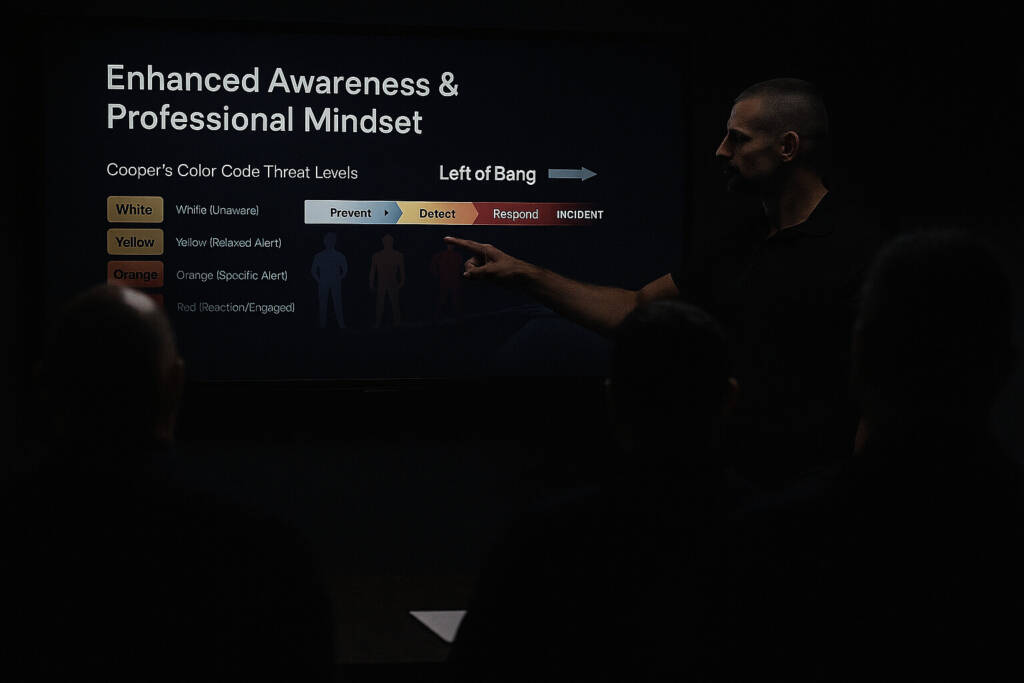
The programme included Cooper’s Colour Code, a model used to describe different levels of mental awareness and readiness.
The underlying principle is straightforward. Awareness should be proportionate to the environment. A professional can remain relaxed and attentive without moving through everyday situations in a constant state of alarm.
The model helps participants recognise when general awareness should become more focused attention and when a specific development requires a prepared response. Used correctly, it supports calm transitions between different levels of readiness rather than reactive decision-making.
This reinforces an important FEA principle: calm is not the absence of awareness. Calm is the ability to remain observant without allowing pressure to control behaviour.
Acting Before the Incident
Another central part of the course was the Left of Bang principle.
“Bang” represents the point at which an incident has already occurred. To be left of bang is to recognise relevant indicators, prepare and act while there is still time to influence the outcome.
For an FEA Safety Driver, that may mean identifying a disruption before reaching a destination, recognising that an established route is no longer appropriate or noticing behaviour that warrants a different approach.
The goal is avoidance wherever possible.
The most professional response is often not the most visible one. It may simply be a calm adjustment made early enough that the client never experiences the problem that was avoided.
This is why awareness and planning belong together. Observation without a clear process may create uncertainty. A well-designed standard operating procedure helps convert information into proportionate action.
Recognising Possible Surveillance
The course also introduced surveillance detection: the disciplined observation of patterns that may indicate repeated or deliberate monitoring.
Effective surveillance detection is not about constantly looking over one’s shoulder. It requires an understanding of time, distance, environment and repetition. The challenge is to remain observant without signalling awareness or disrupting the client’s experience.
Participants therefore trained in techniques for looking without appearing to look, identifying recurring behaviour and separating meaningful patterns from coincidence.
For professional transport operations, this capability can support early decisions about routes, timings, stopping points and communication. It also reinforces the importance of reporting observations clearly so that decisions are based on facts rather than impressions alone.
From Intuition to Professional Judgement
Intuition formed another part of the programme.
Experienced professionals sometimes recognise that something is unusual before they can immediately explain why. The purpose of training is not to follow every instinct without question. It is to examine what triggered the reaction and connect it to observable details.
Perhaps the environment has become unexpectedly quiet. Perhaps a person’s behaviour differs from the surrounding group. Perhaps a vehicle appears repeatedly without an obvious reason.
Training helps translate the initial feeling into a disciplined assessment:
- What has changed?
- What is actually observable?
- Does the change matter?
- What proportionate action is available?
This process turns intuition from a vague reaction into a starting point for professional judgement.
Creating a Stronger Safety Driver
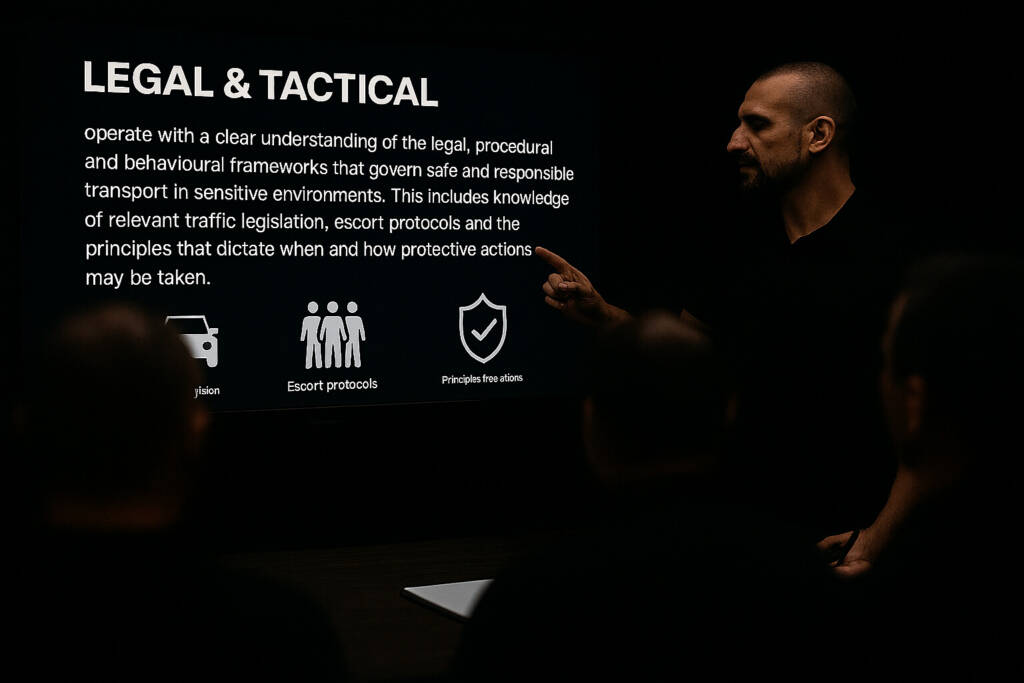
The Enhanced Special Awareness Security Course added another layer to the developing FEA standard.
Technical driving ability remains essential, but the vehicle is only one part of the operating environment. A professional Safety Driver must also understand the route, the destination, the people nearby, changes in normal patterns and the choices available if conditions shift.
The training strengthened five connected areas:
- awareness of people and environments;
- recognition of behavioural and environmental changes;
- proactive decision-making before an incident;
- structured use of standard operating procedures; and
- discreet detection of possible surveillance.
Together, these capabilities support a driver who is not simply reacting to events, but continuously building an understanding of the journey as it develops.
The Beginning of a Wider Training Journey
This programme was completed before the formation of FEA Security Services Group and before the FEA Executive Advisors identity reached its current form.
That makes the investment significant.
It shows that the development of FEA did not begin with a new name or organisational structure. It began earlier, through deliberate investments in people, judgement and capability.
The Enhanced Special Awareness Security Course established a foundation that later training would continue to build upon. Medical readiness, advanced driver development, international coordination and stronger operating standards all followed the same underlying principle:
Competence must be developed before circumstances demand it.
For our clients, this work should rarely be visible.
What clients should experience is a calm journey, professional conduct and the confidence that the person responsible for their movement is paying attention to more than the road ahead.
That is the value of enhanced awareness.
Not creating fear. Not drawing attention.
Seeing earlier, deciding better and preserving the client’s freedom to move.